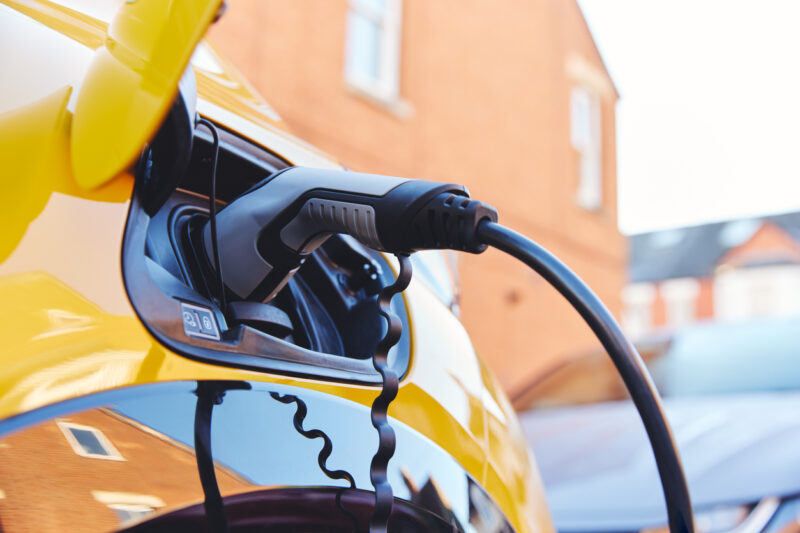

If you’ve just got an EV, or one’s arriving in a few weeks, the question you’re probably asking is a simple one: which home charging tariff actually saves me the most money? The answer, annoyingly, depends on how you drive, when you charge, whether you’ve got a smart meter, and whether your car and charger happen to appear on a supplier’s compatibility list. That’s why a straight “top 10” ranking misses the point.
This guide pulls together the best EV tariffs available in the UK in 2026, what each one actually offers (rather than what the marketing suggests), and who each one suits. By the end, you’ll know which tariff fits your setup, roughly how much you could save, and exactly how to switch without getting stung by the small print.
Are EV tariffs actually worth it in 2026?
Short answer: yes, if you can reliably charge overnight. The gap between a standard electricity rate and the best EV tariff is now too big to ignore.
From 1 April 2026, the Ofgem price cap sets the standard variable electricity rate at 24.67p/kWh, with a daily standing charge of 57.21p (average, direct debit). The next cap review kicks in on 1 July 2026. Meanwhile, the best EV tariffs are offering off-peak rates between roughly 6.6p and 8p/kWh overnight. That’s a saving of around 17–18p on every kWh of charging you can shift into the cheap window.
For the average UK driver doing around 7,000 miles a year, that works out at several hundred pounds of savings annually, sometimes more once you factor in running the dishwasher, washing machine and heat pump (if you have one) on the cheap rate too. A high-mileage driver who charges nightly can easily clear £500 a year in savings.
But, and this is the bit most articles gloss over, EV tariffs only make sense if you can actually use the cheap window. If you rely on public charging most of the week, or you can’t charge overnight, the higher peak rates on most EV tariffs will quietly eat your savings alive.
How EV tariffs actually work
There are three flavours of EV tariff in the UK right now, and they behave quite differently.
Two-rate tariffs with a fixed off-peak window. The most common setup. Your whole home gets cheap electricity during a fixed overnight window (say, midnight to 5am), and you pay a higher peak rate the rest of the time. Examples: British Gas EV Power, E.ON Next Drive, EDF GoElectric, Ecotricity, Good Energy EV Charge. Simple, predictable, works with any EV and any charger. Just plug in and set a timer.
Smart or intelligent tariffs. These schedule your charging automatically. You tell the app when you need the car ready and how much charge you want, and the supplier picks the cheapest slots. Intelligent Octopus Go is the biggest example. You still get a guaranteed overnight window at the cheap rate, but the smart scheduling can grab extra cheap slots outside it when the grid is greener. The catch: your EV and charger have to be on the supplier’s compatibility list.
Add-on tariffs that apply only to the car. OVO’s Charge Anytime is the main example, and it changed dramatically in late 2025. Rather than cheap electricity for the whole home, you pay for a monthly subscription covering a set number of EV charging miles at a fixed price, with the rest of your home staying on its normal tariff. Good for drivers who don’t want to faff with two rates, less good if you wanted to shift laundry and heating into cheap hours too.
Almost all of these need a smart meter that sends half-hourly readings. If you haven’t got one, your supplier is legally obliged to install one for free when you request it. Smart meter installation typically takes a few weeks and has to happen before the EV tariff goes live.
The other thing worth understanding: the “whole home benefits” versus “EV only” distinction. On a two-rate tariff, your dishwasher running at 2am is as cheap as your EV charging. On an add-on tariff like the OVO subscription, the discount only applies to the car. For some households that second option is plenty. For others, the whole-home cheap window is where the real savings come from.
For a broader look at how UK electricity tariffs work before you get into the EV-specific detail, see [Energy Tariffs Explained: A Complete Guide for UK Bill Payers].
The variables that actually matter when comparing EV tariffs
It’s tempting to just pick whichever tariff has the lowest advertised p/kWh and be done with it. That works for some people. For most, the picture is more complicated.
Here’s what actually moves the needle:
Off-peak rate. The headline number. Currently sits between around 6.6p and 9p/kWh across the main players. A penny or two here adds up over a year of nightly charging, but it’s rarely the biggest factor on its own.
Off-peak window length. Longer windows mean you can push more of your charging (and household usage) into the cheap rate. EDF’s GoElectric runs 7 hours overnight, which is currently the longest on the market. Most others sit at 5 or 6 hours.
Peak rate. The rate you pay for every other hour of the day. Some EV tariffs have peak rates well above the price cap (around 30p/kWh is common). If you work from home and use a lot of daytime electricity, a high peak rate can wipe out your overnight savings. Always check this, especially if you’re on a low-mileage setup.
Standing charge. The fixed daily cost just for being connected. Under the April–June 2026 price cap this averages 57.21p a day. Some EV tariffs match the cap, a few come in noticeably lower (Ecotricity, Utility Warehouse), some are higher. Over a year it’s worth £10–£50 either way.
Eligibility. Smart meter, yes. But also: does the tariff need a specific EV model, a specific charger, or both? Intelligent Octopus Go works with hundreds of combinations but not all. OVO’s Charge Anytime needs a compatible car or a compatible charger. E.ON’s Next Drive Smart needs a compatible EV and charger. The plain-vanilla options (Octopus Go, British Gas EV Power, E.ON Next Drive, EDF GoElectric, Ecotricity) work with anything.
Whole-home versus EV-only cheap rate. As covered above, this matters more than most drivers assume.
Exit fees. Usually £75 to £150 per fuel. Good Energy is lower at £50. Octopus’s Flexible tariff has no exit fees but new fixed tariffs added them in March 2026. E.ON’s Next Drive tariffs currently have no exit fees, which is handy if you’re not sure your setup will work out.
Fixed versus variable. Some of these tariffs lock your rates for 12 months, others track the wholesale market or change quarterly in line with the price cap. EV tariff rates have moved multiple times in 2026 alone, so fixed protection is worth thinking about if you hate surprises.
The lowest headline rate isn’t always the cheapest total bill. Peak rate, standing charge, and how much of the cheap window you actually use all feed into the real number.
Comparison: the main UK EV tariffs in 2026
Rates below are verified from supplier websites as of April 2026. Some rates vary by region, all change from time to time, and anything involving bundled services or specific chargers is flagged.
| Supplier / Tariff | Off-peak rate | Off-peak window | Peak rate | Standing charge | Smart meter | EV/charger compatibility | Exit fee |
|---|---|---|---|---|---|---|---|
| Octopus Intelligent Go | ~8p/kWh | 23:30–05:30 (6 hrs) + smart slots | ~27–28p/kWh | Varies by region | Yes | Compatible EV/charger required | £75 (new fixed tariffs) |
| Octopus Go | ~9.5p/kWh (varies by region) | 00:30–05:30 (5 hrs) | ~27–28p/kWh | Varies by region | Yes | Any EV and charger | £75 (new fixed tariffs) |
| OVO Charge Anytime (subscription) | £27.50–£37.50/month for 175–250 kWh/month | Smart-scheduled any time | Standard home tariff applies | Standard home tariff applies | Yes | Compatible EV or charger | Waived if leaving due to changes |
| OVO Charge Anytime (PAYG) | 14p/kWh | Smart-scheduled any time | Standard home tariff applies | Standard home tariff applies | Yes | Compatible EV or charger | None on add-on |
| E.ON Next Drive Smart | 8p/kWh | 00:00–06:00 (6 hrs) | ~27.9p/kWh | Regional | Yes | Eligible EV and charger required | None |
| E.ON Next Drive | 9p/kWh | 00:00–06:00 (6 hrs) | ~27.9p/kWh | Regional | Yes | Any EV and charger | None |
| British Gas EV Power | 9p/kWh (7.9p with Hive “Power+”) | 00:00–05:00 (5 hrs) | ~31p/kWh | Regional | Yes | Any EV and charger (Hive for Power+) | Varies by tariff |
| EDF GoElectric | 6.99p/kWh | 23:00–06:00 (7 hrs) | ~30p/kWh | Regional | Yes | Any EV and charger | £75 per fuel |
| Good Energy EV Charge | 6.6p/kWh | 00:00–05:00 (5 hrs) | Relatively high peak rate | Regional | Yes | Smart charger and EV | £50 |
| Utility Warehouse EV Double Gold | 6.9p/kWh | 00:00–05:00 GMT | Regional | Low | Yes, plus 3+ service bundle | Any EV | £75 per fuel |
| Ecotricity 1 Year Fixed EV | 8p/kWh | 00:00–05:00 GMT (1am–6am BST) | ~31p/kWh | Low | Yes | Any EV or hybrid | £100 per fuel |
Rates are indicative. Always confirm the exact figure for your postcode on the supplier’s site before switching, because EV tariff rates have been unusually fluid throughout 2026.
Tariff-by-tariff breakdown
Intelligent Octopus Go
The one most people have heard of, and for good reason: it’s been the default recommendation for EV drivers for years. You get six hours of guaranteed whole-home off-peak electricity (11:30pm to 5:30am) at around 8p/kWh, plus up to six hours of smart-scheduled charging per 24-hour period that can fall outside the core window when the grid is green. Works with over 280 car and charger combinations.
The catch. From early 2026, Octopus started enforcing the six-hour smart charging limit automatically. If your charge session runs longer than six hours (because you’ve got a big battery, or a slow charger, or you’re topping up from near-empty), anything after that hits your peak rate. For most people, six hours is enough. If you routinely need more, factor it in.
Existing Octopus customers can switch to Intelligent Octopus Go from within their account. New customers switching to Octopus can get £50 of bill credit with a referral link [Affiliate Link], which is a nice bonus rather than a reason to switch on its own.
Octopus Go
The simpler, older sibling. A fixed 5-hour off-peak window (12:30am to 5:30am) at around 9.5p/kWh, works with any EV and any charger. No compatibility list, no app scheduling required. Just set a timer on your charger or your car.
Best for drivers whose setup isn’t compatible with Intelligent Octopus Go, or who want something that just works without an app.
OVO Charge Anytime (subscription)
OVO restructured this in November 2025, and it’s now quite different from most EV tariffs. Instead of a cheap overnight rate on your electricity bill, you pay a flat monthly fee for a set number of home charging kWh, with some public charging credit bundled in. £27.50 a month for up to 175 kWh of home charging (around 700 miles) on the Standard plan, or £37.50 for 250 kWh (around 1,000 miles) on Premium. Both include £120/year of public charging vouchers. Pay-as-you-go Charge Anytime is still around at 14p/kWh, which is noticeably higher than rival overnight rates.
The rest of your home electricity stays on your normal OVO tariff. If you mostly want to cover EV charging and don’t care about whole-home cheap hours, the subscription model is predictable and simple. If you want to shift heating, laundry and cooking into a cheap window too, this isn’t the tariff for that.
E.ON Next Drive Smart
A fixed 8p/kWh between midnight and 6am, applying to your whole home during those six hours. Eligible EV and charger required, and there’s no exit fee. Peak rate sits near the price cap rather than well above it, which helps high-daytime-usage households.
Strong pick for drivers who want a long, guaranteed off-peak window and don’t want a smart tariff that might rearrange their charging slots on the fly.
E.ON Next Drive (non-smart)
Same six-hour window, but the rate is 9p/kWh and there’s no EV/charger eligibility list. Works with anything, including older cars and plug-in hybrids. 1p more per unit than Next Drive Smart, but simpler and more accessible.
British Gas EV Power
Off-peak rate of 9p/kWh from midnight to 5am, with no restrictions on EV or charger. The whole home gets the cheap rate during that window. British Gas customers with a Hive EV charger can unlock “Power+” which drops the off-peak rate to around 7.9p/kWh, making it more competitive. There’s also a “PeakSave” Sunday benefit (half-price electricity from 11am to 4pm on Sundays) which stacks with the EV tariff.
The peak rate is on the higher side, so worth checking against your daytime usage. The five-hour window is shorter than E.ON’s or EDF’s, which matters if you need to charge from near-empty.
EDF GoElectric
EDF repriced its EV tariffs in April 2026 and came out with some of the most aggressive rates on the market. 6.99p/kWh between 11pm and 6am, which is seven hours, the longest off-peak window currently available. Works with any EV and any charger. If you pair it with EDF’s Smart Charging add-on you get extra off-peak hours outside the core window and £60 of annual bill credit.
The catch: exit fees apply if you leave within two years of signing up. Worth it if you’re confident in your setup, potentially costly if you’re likely to move supplier again.
Good Energy EV Charge
6.6p/kWh overnight (midnight to 5am), paired with 100% renewable electricity and a free Zap-Map Premium subscription for the first 12 months. The cheapest headline rate on this list. Requires a smart meter and a smart charger, and you need to already be a Good Energy customer to sign up, which adds a step.
The peak rate is relatively high, so the tariff suits drivers who can reliably shift most of their home electricity into the overnight window. If you work from home with electric heating, run the numbers carefully.
Utility Warehouse EV Double Gold
6.9p/kWh off-peak (midnight to 5am GMT), paired with a low standing charge and a decent peak rate. On paper, one of the strongest tariffs on the market.
The catch is substantial. You only qualify for EV Double Gold if you take three or more services from Utility Warehouse (energy being one, the others drawn from broadband, mobile, and home cover). If you were going to bundle anyway, it’s a bargain. If you weren’t, you’ll be paying for services you don’t need, which cancels the savings.
Ecotricity 1 Year Fixed EV
8p/kWh between midnight and 5am (1am to 6am during British Summer Time), paired with 100% green electricity and a relatively low standing charge. Open to new and existing customers. The off-peak rate isn’t the cheapest, but for drivers who specifically want green electricity and low standing charges, it’s worth a look.
Exit fee is £100 per fuel, which is the highest on this list. Go in eyes open.
How much could you actually save?
The honest answer: it depends on how much of your electricity you can push into the cheap window. Here’s a worked example with the assumptions spelled out.
Setup: UK driver doing 8,000 miles a year. EV efficiency of 3.5 miles per kWh. That’s roughly 2,285 kWh of electricity per year for charging.
On the April 2026 price cap (24.67p/kWh): 2,285 × £0.2467 = around £564 per year just to charge the car.
On a strong EV tariff at 7p/kWh, all charging done in the off-peak window: 2,285 × £0.07 = around £160 per year.
That’s a saving of roughly £400 a year on EV charging alone. If you also push dishwasher, washing machine, tumble dryer, and (if you have one) a hot water cylinder or heat pump into the cheap hours, the total household saving can easily stretch to £500–£600 a year.
Two caveats to keep honest about. Peak rates on EV tariffs are typically higher than the price cap, so if less than roughly 30% of your household electricity falls into the cheap window, the savings shrink fast. And some drivers, particularly those with small batteries or big commutes, can’t physically fit their charging into a 5-hour window without relying on peak-rate boost charging, which chips away at the sums.
If you want help modelling it for your own usage, the Energy Saving Trust’s home energy calculator is useful for a rough first pass.
Which tariff is best for you?
There’s no single answer, but here’s a blunt shortlist by driver type.
High-mileage driver who can charge every night: Intelligent Octopus Go if your car and charger are compatible, because the smart scheduling and bonus off-peak slots maximise what you can pull into the cheap rate. EDF GoElectric as a close second if you want the longest off-peak window and don’t mind the exit fees.
Low-mileage driver who charges twice a week: British Gas EV Power or E.ON Next Drive. Both work with any EV and charger, so you’re not locked into a compatibility list. The savings are more modest at this mileage, so simplicity wins.
Solar + home battery household: This gets complicated. Intelligent Octopus Go pairs well because you can top up the battery from cheap overnight grid electricity when solar underperforms, then sell solar back during peak. Pair it with an export tariff like Outgoing Octopus for extra income. Good Energy’s tariff also works if you prefer a single green-energy provider.
Shift worker with irregular hours: Two-rate tariffs with fixed overnight windows are a pain if you can’t be home between midnight and 5am. Consider Octopus Agile (half-hourly wholesale pricing) if you can time usage flexibly, or the OVO Charge Anytime subscription if you mostly just need EV charging covered without thinking about windows.
Driver with no smart meter yet: Get one installed first. Every EV tariff on this list requires one. Suppliers install them free. Until the meter’s live, stay on your current tariff and plan the switch for once the smart meter is sending half-hourly reads.
Driver still waiting on EV delivery: Some suppliers let you sign up before the car arrives, some don’t. Octopus and British Gas tend to be flexible; others want proof of ownership. Worth an email to confirm before you switch.
The step-by-step switching process
Step 1: Check eligibility. Does the tariff need a specific car, charger, or bundle? Do you have a smart meter that can send half-hourly readings? Are you in the right region? If any of these are unclear, contact the supplier before starting the switch. You don’t want to be halfway through before discovering your charger isn’t on the list.
Step 2: Work out your likely off-peak share. Look at your last few energy bills and estimate how many kWh a month you could realistically push into the cheap window. Include the EV, plus dishwasher, washing machine, and anything else on a timer. The higher the share, the more the tariff maths stacks up.
Step 3: Compare total cost, not headline rate. Plug your estimated off-peak and peak usage into each tariff’s rates (including standing charge) to get an annual total. Most switching comparison sites do this automatically, or you can do the back-of-envelope version yourself. Look at the full annual cost, not just the flashy off-peak number.
Step 4: Apply with the new supplier. Usually done online in 10 minutes. You’ll need your current supplier’s name, your MPAN (the unique number for your electricity meter, on your bill), and bank details. The Energy Switch Guarantee means the switch should complete within about three weeks.
Step 5: Smart meter setup and half-hourly data sharing. If you already have a smart meter, the new supplier will connect to it remotely. If you don’t, they’ll book an installation appointment (usually within a few weeks). You’ll need to opt in to half-hourly data sharing, which is how the supplier knows when you used electricity overnight versus during the day.
Step 6: Configure your charger or app for smart charging. On smart tariffs like Intelligent Octopus Go, you’ll link the Octopus app to your charger or EV and set your “ready by” times. On two-rate tariffs, you just set the charger or car to start charging at the beginning of your off-peak window and stop at the end. Takes 5 minutes.
Step 7: Monitor the first full bill. Check that off-peak usage is being billed at the off-peak rate and peak usage at the peak rate. Smart meter setup issues are the single most common complaint about EV tariffs, and they normally show up in the first bill. If something’s wrong, contact the supplier straight away.
For a more general guide to the switching process, see [How to Switch Energy Supplier in the UK].
Common pitfalls and how to avoid them
Bundled pricing that requires extras. Utility Warehouse’s EV Double Gold is genuinely competitive, but only if you were going to take broadband, mobile, and home cover from them anyway. Don’t sign up for services you don’t need just to unlock an EV tariff.
Tariffs that quietly change terms. EV tariff rates have moved several times in 2026 alone. OVO restructured Charge Anytime into a subscription in late 2025. Octopus brought in a 6-hour smart charging cap. EDF cut rates in April 2026 after raising them earlier in the year. Read the T&Cs, check whether you’re on a fixed or variable rate, and diarise a review date.
Smart tariff scheduling that doesn’t play nice with your charger. Intelligent Octopus Go sometimes slows or pauses charging to support the grid, which can stretch a 6-hour session into 8–9 hours. Once you go past the 6-hour cap, extra time bills at peak. Some chargers and cars handle this better than others. Check the forums for your specific setup.
Peak-rate bill shocks. The most common surprise. You boost-charge because you ran out of range, or someone left the immersion on during the day, and suddenly you’ve used 10 kWh at 30p/kWh rather than 7p/kWh. Running your numbers assuming 100% off-peak use is optimistic; assume at least 10% slips into peak.
Exit fees on tariffs that looked cheap at sign-up. EDF (£75 per fuel), Ecotricity (£100 per fuel), Utility Warehouse (£75 per fuel). If you’re not confident you’ll stay 12 months, those fees eat into your savings.
Losing the EV rate if eligibility lapses. Sold the car? Replaced the charger with a model that isn’t on the compatibility list? You can get kicked off the EV tariff and moved to a standard variable rate, sometimes without much notice. Update the supplier when your setup changes.
What if the tariff doesn’t work as advertised?
Complain to the supplier first. Most issues (wrong rates on the first bill, smart meter not configured correctly, app scheduling not working) get resolved inside a couple of weeks once you escalate.
If the supplier can’t fix it within 8 weeks, or issues you a deadlock letter, you can escalate to the Energy Ombudsman. The service is free to consumers. Citizens Advice provides independent consumer support and can help you work out whether you’ve got a legitimate complaint or just an unfamiliar bill.
Most EV tariffs work fine. Smart and intelligent tariffs have more moving parts, which means more things that can go wrong, especially in the first couple of months.
Special cases
Drivers without a smart meter. Most EV tariffs require one. If your property can’t have a smart meter (some flats, some rural areas with poor signal), your options shrink to standard variable tariffs or Economy 7, neither of which is ideal for EV charging. Ask your supplier about meter availability before getting your hopes up.
Renters. You can still switch supplier if you pay the electricity bill directly. You may not be able to install a home charger without landlord permission, though, and some landlords block it. If you’re renting, check your tenancy agreement and ask the landlord before committing to a tariff that requires a home charger.
Solar + battery households. You’ve got more options. Octopus Flux, or an Intelligent Octopus Go + Outgoing Octopus combination, lets you charge the battery overnight at cheap rates and export solar during the day. Every supplier now has a version of this, and the maths varies a lot by system size. For a supplier-led view, see [Best Energy Supplier for Electric Cars UK 2026].
Economy 7 customers thinking about switching. Economy 7 gives you 7 hours of cheap electricity overnight, but the rate is usually around 14–18p/kWh, much higher than modern EV tariff off-peak rates. If you already have a smart meter, switching to a proper EV tariff almost always saves you money. If your Economy 7 runs off an old meter, you may need to have it replaced first.
Households with no off-street parking. Home charging is harder but not impossible. On-street cable protectors, lamp-post chargers, and shared workplace charging can all work. Some suppliers are trialling EV tariffs for customers who rely on public charging, but the economics are worse than home charging. If you can’t reliably charge at home, think twice before committing to an EV tariff.
Pre-delivery EV buyers. Octopus and some others let you sign up before the car arrives. Others want to see proof of ownership. Get your smart meter sorted in the interim, because that’s usually the longest step.
FAQ
What is the cheapest EV tariff in the UK right now? On headline off-peak rate, Good Energy EV Charge (6.6p/kWh) and EDF GoElectric (6.99p/kWh) are currently at the top of the market, with Utility Warehouse EV Double Gold at 6.9p/kWh if you qualify for the bundle. Whether any of these is the cheapest for you depends on standing charges, peak rates, and how much of your usage falls off-peak.
Do I need a smart meter for an EV tariff? Yes. Every major EV tariff in the UK needs a smart meter sending half-hourly readings. Your supplier has to install one free when you request it.
Can I get an EV tariff if I don’t own the car yet? Some suppliers let you sign up pre-delivery, others want proof of ownership. Check with the supplier before switching.
Does the cheap rate apply to my whole house or just the car? Depends on the tariff. Two-rate tariffs (Octopus Go, British Gas EV Power, E.ON Next Drive, EDF GoElectric, Ecotricity) apply the cheap rate to your whole home during the off-peak window. OVO Charge Anytime is a subscription add-on that covers EV charging only, with the rest of the home on your normal tariff.
What happens if I charge during peak hours? You pay the peak rate, which on most EV tariffs is higher than the price cap (typically 27–31p/kWh). Boost charging during the day can undo a week of overnight savings quickly.
Can I use an EV tariff with solar panels? Yes, and it can be very profitable. Intelligent Octopus Go and similar tariffs let you charge your home battery overnight at cheap rates while exporting solar during the day on an export tariff. Good Energy and Octopus both have setups designed for this.
Will switching to an EV tariff void my charger warranty? No. Using a supplier’s smart tariff, including any API connection between the charger and supplier, doesn’t affect most charger warranties. Always worth checking the specific terms with your charger manufacturer.
Is it worth switching if I’m on the price cap? For most EV drivers charging at home, yes. Even a modest 5,000 miles a year moved into a proper off-peak window usually saves £250–£300 compared to the cap.
Conclusion
If you’re a high-mileage driver with a compatible car and charger, Intelligent Octopus Go is hard to beat once you factor in the smart scheduling. If you want the simplest whole-home two-rate tariff with a long off-peak window, E.ON Next Drive or EDF GoElectric are both strong picks. For the lowest headline rate and a green conscience, Good Energy EV Charge is worth a look. For bundled households, Utility Warehouse. For add-on style, OVO’s subscription.
Low-mileage drivers shouldn’t assume an EV tariff is automatically worth it. Run your own numbers. If you’re only charging twice a week, the peak-rate differential on some tariffs can cost you more than the off-peak rate saves you. In that case, sitting on a well-priced standard tariff may come out ahead.
Solar and battery households should think about their export tariff alongside the EV tariff. The two interact in ways that materially change the total household bill.
Shift workers and anyone who can’t reliably charge overnight should think carefully before committing. An EV tariff where you can’t actually hit the cheap window is just a more expensive standard tariff.
Anyone without a smart meter yet: start there. Book an installation, then revisit this article in a month.
For a broader view of how EV tariffs fit into your total energy strategy, see [The 2026 Master Guide: How to Actually Slash Your Energy Bills]. And if you haven’t switched supplier in a while, [How to Switch Energy Supplier in the UK] walks through the whole process.
EV tariff rates, off-peak windows and exit fees have shifted multiple times in 2026 already. Always confirm the current rate with the supplier before signing up, because what’s accurate today may have moved by next quarter.