
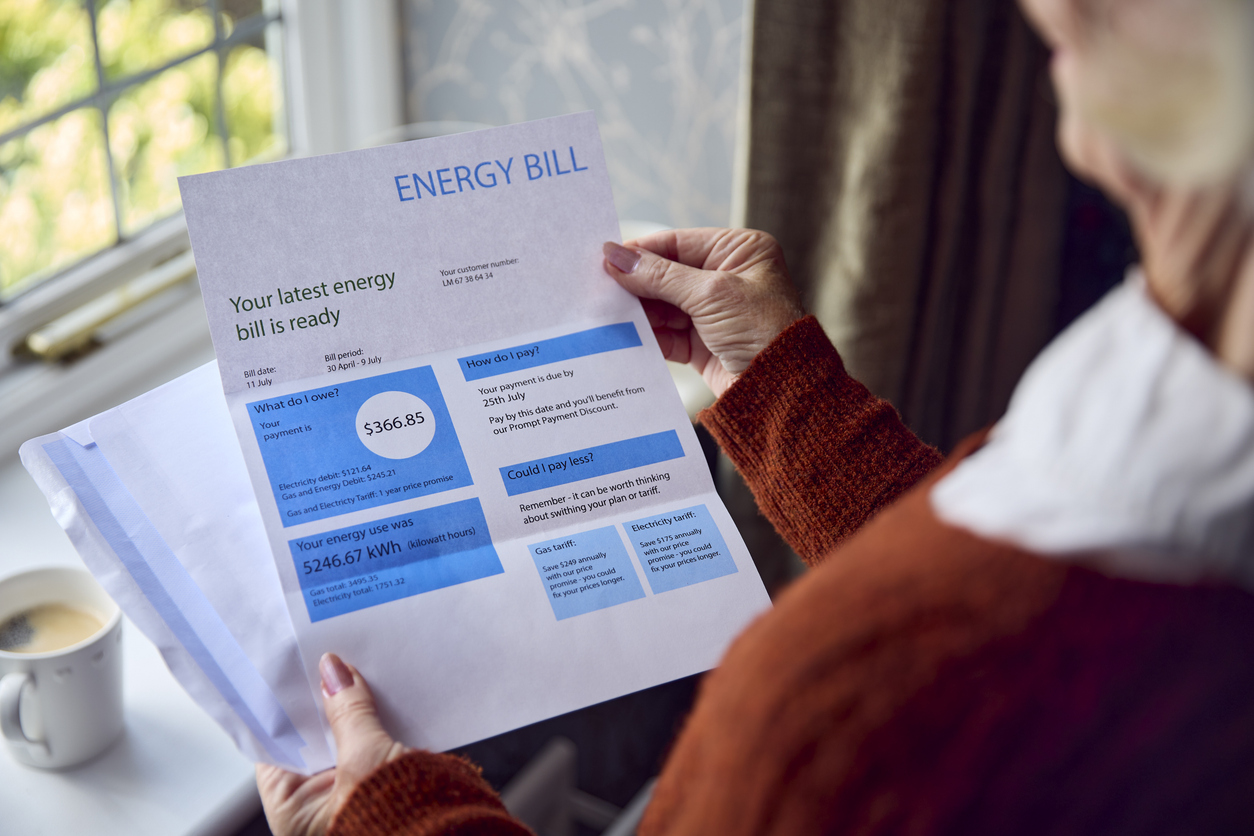
You open your energy bill, scroll past the usage, and there it is. A line called “standing charge”. Charged every single day. Even the days you went away, turned everything off at the wall, and genuinely used nothing. You’re still paying it.
It feels wrong. It might even feel like a scam.
It isn’t, not quite. But it’s also not the simple “network fee” suppliers often claim. Here’s standing charges explained properly: what the money actually pays for, how Ofgem sets it, why it’s climbed so sharply, and whether any of the shiny new zero-standing-charge tariffs are worth a second look.
What a standing charge actually is
A standing charge is a fixed daily fee you pay just for being connected to the gas and electricity networks. It’s charged in pence per day, per fuel, and it applies whether you use a single kilowatt-hour or none at all.
If you have both gas and electricity, you’re paying two standing charges. Every day. Or at least until you move or switch to a tariff that handles things differently.
For a broader walkthrough of every line on your bill, it’s worth reading Understanding Your Energy Bills – A Complete Guide.
What the standing charge actually pays for
This is the bit most suppliers gloss over. The standing charge isn’t just “keeping the lights on” in some vague sense. It’s a bundle of costs that have quietly been loaded onto that one line over the years.
| Cost category | What it covers |
|---|---|
| Network costs | Pylons, substations, gas pipes, the high-voltage transmission grid, and the local distribution network that gets energy to your street |
| Metering | Installing, reading, and maintaining meters, including the smart meter rollout |
| Operating costs | Suppliers’ core running costs, billing systems, staff, call centres |
| Policy costs | A share of government social and environmental schemes, such as the Warm Home Discount and, for gas, the Green Gas Levy |
| Supplier failure costs | The bill from the 2021–22 supplier collapses, when around 30 firms went bust and their customers were absorbed by other suppliers |
| Supplier margin and headroom | A small allowance for profit and uncertain costs |
For electricity specifically, network costs are the giant. According to the House of Commons Library, almost 60% of the electricity standing charge under the Q2 2026 price cap is made up of network charges, split between the national transmission system and the local distribution network.
Gas is different. Gas standing charges don’t include network costs at all. Those are recovered through unit rates instead. Which is partly why gas and electricity standing charges have drifted so far apart.
How standing charges are calculated and set
Ofgem sets a maximum standing charge as part of the energy price cap, reviewed every three months. That cap only applies to standard variable tariffs, not to fixed deals, where suppliers can set their own standing charges within reason.
For the cap running 1 April to 30 June 2026, average direct debit standing charges are roughly 57.2p a day for electricity and 29.1p a day for gas. That’s about 86p a day for dual fuel, or around £315 a year before you’ve used any energy at all.
Those are averages. The actual figure depends on where you live, because different network regions have different distribution costs. London and the South East pay different amounts to, say, North Wales or the North of Scotland. If your mate in another city is paying less, that’s usually why, not some secret loyalty discount.
Payment method matters too. Customers paying on receipt of bills pay more. Prepayment meter customers now pay the same standing charge as direct debit customers, following a policy change called levelisation.
Why they’ve gone up so much
Electricity standing charges jumped more than 80% in April 2022. They’ve risen again in most years since for a few reasons.
The 2021–22 supplier collapses left a huge bill behind. When Bulb and the others fell over, their customers had to go somewhere, and the receiving suppliers were allowed to recover those costs through the price cap. That mostly landed on electricity standing charges.
Then there’s network investment. Britain is rebuilding its grid for renewables and electrification, and the National Energy System Operator’s transmission costs are climbing. The transmission element of the electricity standing charge is going up by around 65% in Q2 2026 alone.
And there’s a structural issue. Ofgem has, over several years, shifted costs from unit rates onto standing charges. That was partly to stabilise supplier revenue. The downside: it hits low users hardest, because a fixed daily fee is a bigger share of a small bill than a big one.
That last point is what Martin Lewis has been banging on about for years, and it’s why a lot of people feel like they’re being punished for using less.
Can you avoid standing charges?
Kind of, but not really.
A handful of suppliers offer zero-standing-charge or low-standing-charge tariffs. These don’t make the costs disappear. They shift them into the unit rate. So you pay nothing per day, but more per kWh.
Whether that saves you money depends entirely on how much energy you use. Here’s a rough illustrative example using round numbers (don’t quote me on the exact pence).
Low user: 1,500 kWh electricity a year
- Standard tariff: 57p/day standing charge + 27p/kWh = £208 standing + £405 usage = £613
- Zero standing charge: 0p/day + 37p/kWh = £0 + £555 = £555
- Saving: about £58
Average user: 2,700 kWh electricity a year
- Standard tariff: £208 + £729 = £937
- Zero standing charge: £0 + £999 = £999
- Extra cost: about £62
Same tariff, opposite outcome. The crossover point is usually somewhere around 1,800–2,200 kWh a year for electricity, depending on the exact rates. If you’re a high user, a zero-standing-charge deal will cost you more, not less. If you’re a very low user (a second home, a small flat, someone away for months), it can genuinely help.
If your real problem is that you’re using a lot of energy and the bill is painful, the standing charge probably isn’t the thing to focus on. Have a look at Why Are My Energy Bills So High? instead.
What’s changing
Ofgem has been consulting on standing charge reform for a couple of years now, and the picture in 2026 is still messy.
The original plan was a zero-standing-charge variant sitting inside the price cap. That got watered down. Then Ofgem said it would require all major suppliers to offer a low standing charge tariff by January 2026. That deadline came and went. In February 2026, Ofgem announced a one-year pilot starting in April 2026, with four of the big suppliers offering lower standing charge tariffs to a limited number of eligible customers.
A wider review, called the Cost Allocation and Recovery Review, is also running, looking at how all these fixed costs should be split across bills in the longer term.
So there is movement. Just slow movement, and nothing that guarantees cheaper bills. Ofgem has been clear throughout that the costs can’t be removed, only moved around.
FAQ
Do I pay a standing charge if I’m away?
Yes. That’s the whole point, frustratingly. The fee is for the connection, not the consumption.
Can I get a tariff with no standing charge?
Some suppliers offer them. They come with higher unit rates, so they usually only save money if you use very little energy.
Why is my standing charge higher than my neighbour’s?
Probably because they’re on a different tariff, or a fixed deal signed at a different time. Regional differences apply across distribution areas, not house by house.
Summary of standing charges
Standing charges exist because running an energy network costs money whether you use it or not, and Ofgem decided the fairest way (or at least the most stable way) to recover those costs was through a fixed daily fee. Whether that’s actually fair is a different conversation, and one the regulator is finally starting to have.
For most people, you can’t escape standing charges entirely. What you can do is understand them well enough to judge whether a particular tariff is worth switching to, or whether the savings on paper will evaporate once the unit rates are added up. That’s really the whole skill of picking an energy deal.
If you want to go deeper on how the different tariff structures compare, our full guide to UK energy tariffs covers the full range. And if you’re considering switching, it’s worth comparing a few options against your actual annual usage rather than the averages on the bill.