

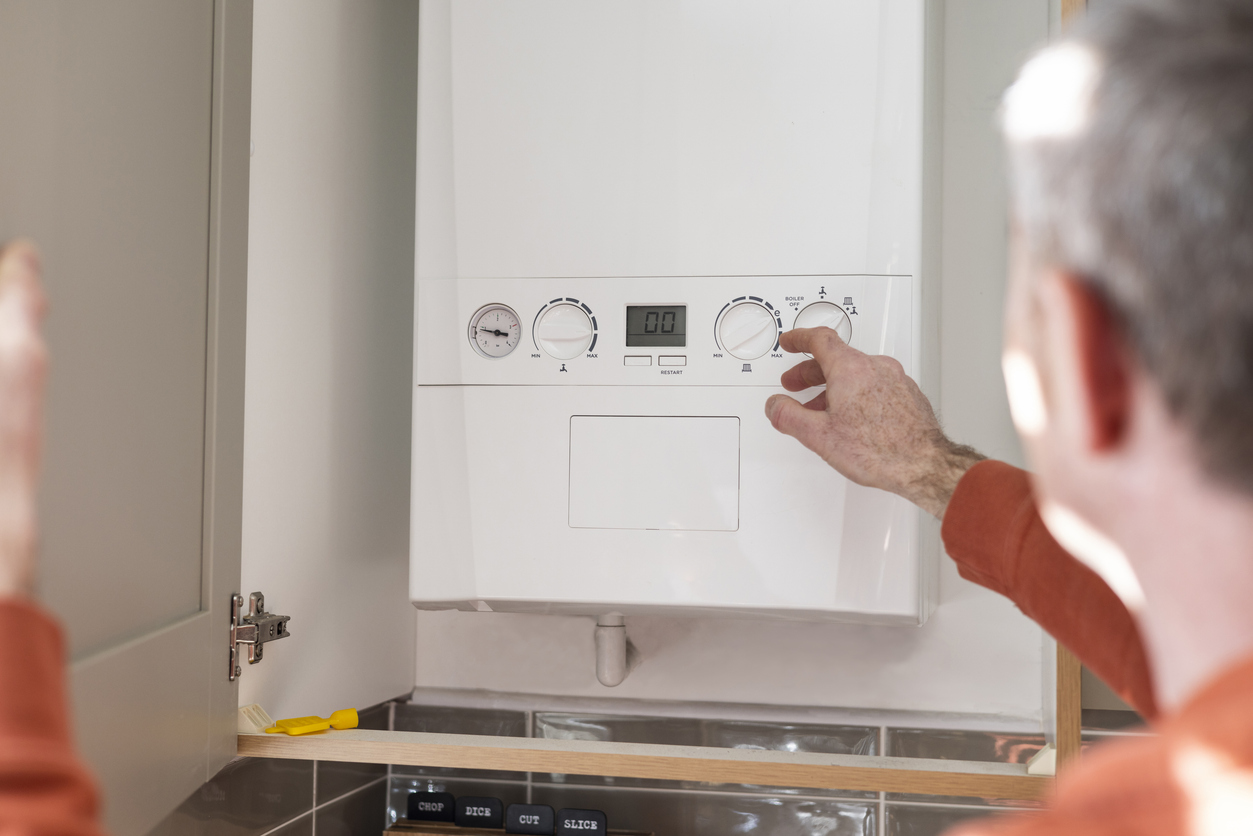
If you need to replace your heating system, choosing between a heat pump and a gas boiler is not simply a question of which technology is better.
A heat pump can be the stronger long-term option when the installation is affordable, there is space for the equipment and the system can be designed to run efficiently. A gas boiler may still be more practical when you need the lowest possible upfront cost, have limited space or would need substantial alterations.
The right answer depends on your home, budget and expected running costs. This guide compares the two options directly. For a broader look at heat pump costs, grants, running costs and whether making the switch makes sense, read Are Heat Pumps Worth It in the UK?
Should You Choose a Heat Pump or Gas Boiler?
A heat pump is worth serious consideration if:
- the Boiler Upgrade Scheme brings it within your budget
- you have space for an outdoor unit and hot water cylinder
- you expect to remain in the property for several years
- the system can achieve good seasonal efficiency
- any required radiator or pipework upgrades are manageable
A replacement gas boiler may be more practical if:
- you need the lowest possible upfront cost
- you do not have suitable space for the equipment
- the required alterations would be unaffordable
- you expect to move home soon
- your existing boiler can be repaired and still has useful life remaining
An older or less insulated property is not automatically unsuitable for a heat pump. What matters is whether the whole system has been designed around the home’s heat loss.
Heat Pump vs Gas Boiler Comparison
| Factor | Gas boiler | Air source heat pump |
|---|---|---|
| Upfront cost | Usually lower | Usually higher before grants |
| Available support | No general replacement grant | Up to £7,500 in England and Wales, or £9,000 for some off-grid homes |
| Running cost | Depends on gas use and boiler efficiency | Depends on electricity price and heat pump efficiency |
| Heating style | Shorter periods at higher temperatures | Longer periods at lower temperatures |
| Hot water | A combi can provide it instantly | Usually stored in a cylinder |
| Space required | Boiler and possibly a cylinder | Outdoor unit and usually an indoor cylinder |
| Installation | Normally quicker | May involve radiator, cylinder or pipework changes |
| Best suited to | Homes prioritising lower upfront cost | Homes able to invest in a well-designed long-term system |
Which Costs More to Install?
A gas boiler normally has the lower upfront cost.
A straightforward like-for-like replacement may cost around £2,500 to £4,500. The price can be higher if the boiler is moved or the flue, controls, cylinder or pipework need changing.
An air source heat pump installation may cost around £8,000 to £15,000 before grants. The final price depends on the home and whether the quote includes a new cylinder, radiators, pipework and electrical work.
This is why comparing the headline appliance price is not useful. You need to compare the full cost of two complete heating systems.
Boiler Upgrade Scheme Grants
In England and Wales, the Boiler Upgrade Scheme currently provides:
- £7,500 towards an eligible air-to-water or ground source heat pump
- £2,500 towards an eligible air-to-air heat pump
- £5,000 towards an eligible biomass boiler
From 21 July 2026 until 31 March 2027, some off-gas-grid properties replacing oil or LPG heating can receive £9,000 towards an air-to-water or ground source heat pump.
Your MCS-certified installer applies for the grant and deducts it from the amount you pay. The post-grant price can therefore be much closer to the cost of a boiler replacement, although this depends on the work required.
Get several quotes as installers can propose very different system designs and prices for the same property. Our Heat Pump Cost Guide explains what affects the final price and what should be included in a complete quote.
Which Is Cheaper to Run?
There is no permanent answer to whether a heat pump or gas boiler is cheaper to run.
The result depends mainly on energy prices, system efficiency, the home’s heat demand and whether the gas standing charge can be removed.
A poorly designed heat pump can be expensive. A well-designed system operating at a lower flow temperature can compete with or beat a gas boiler.
Running Costs From July to September 2026
From 1 July to 30 September 2026, the average Direct Debit price-cap rates are:
- electricity: 26.11p per kWh
- gas: 7.33p per kWh
These are national averages, so your actual rates will depend on your region and payment method.
Consider a home that needs 12,000kWh of useful heating and hot water each year.
A gas boiler operating at 90% efficiency would need approximately 13,333kWh of gas. At the current average gas rate, that would cost around £977 a year, excluding standing charges.
A heat pump with a seasonal coefficient of performance, or SCOP, of 3.5 would use approximately 3,429kWh of electricity. At the current average electricity rate, that would cost around £895 a year, excluding standing charges.
Under these assumptions, the heat pump would cost about £82 less to run.
| Heat pump SCOP | Approximate annual electricity cost |
|---|---|
| 3.0 | £1,044 |
| 3.5 | £895 |
| 4.0 | £783 |
At these prices, a heat pump needs a SCOP of roughly 3.2 to match the heating cost of a 90% efficient gas boiler before standing charges.
These figures are examples, not a prediction of your bill. Your home may need more or less heat, and your actual system efficiency could be different.
A home with no other gas appliances may also be able to remove its gas supply and avoid the gas standing charge.
Do I Need a Heat Pump Tariff?
Not necessarily.
A specialist heat pump tariff can reduce running costs by offering cheaper electricity at certain times of day. How much you save depends on the tariff, how the system is controlled and how much heating or hot water use can be shifted into the cheaper periods.
Compare all the rates, not just the headline off-peak price, as some tariffs charge considerably more during peak hours. A standard electricity tariff can still be competitive when the heat pump is efficient. Our Heat Pump Tariffs Guide compares the main options, their cheaper windows and the types of home they are likely to suit.
Running-cost figures last updated on 16 July 2026.
Would a Heat Pump Work in Your Home?
Heat pumps have been installed successfully in many different types of British home, including older terraces, flats and newer properties.
An EPC rating alone cannot tell you whether a heat pump will work well. What matters is the home’s heat loss, the size of its radiators, the proposed flow temperature, the pipework and whether there is enough space for the required equipment.
The installer should assess the property and design the complete heating system around it. For a more detailed breakdown of what to check, read Is My House Suitable for a Heat Pump?
Heat Loss and Insulation
A room-by-room heat-loss calculation estimates how much heat each room loses on a cold day. This determines the required heat pump output, radiator sizes, flow temperature and likely electricity use.
Better insulation reduces the amount of heat the property needs. Loft insulation, draught proofing and cavity wall insulation can therefore make a heat pump cheaper to run.
However, a home does not need to reach EPC C before a heat pump can work. Older and less insulated homes may need a larger system, higher-output radiators or sensible insulation improvements.
Radiators and Pipework
Heat pumps usually send cooler water through the heating system than a gas boiler. Some radiators may therefore need to be larger to provide enough heat.
Not every radiator will necessarily need replacing. A proper design should show which can stay and which need upgrading.
The installer should also check the pipework. Narrow pipes do not automatically make a heat pump impossible, but some systems may require changes.
Hot Water and Space
Unlike a gas combi boiler, a typical air-to-water heat pump stores hot water in a cylinder.
You need suitable indoor space and enough cylinder capacity for the household’s hot water demand. The outdoor unit also needs airflow and a suitable position, with noise, boundaries and planning restrictions considered.
How Does Heating Feel Different?
A gas boiler normally heats water to a higher temperature and runs in shorter bursts.
A heat pump usually operates for longer at a lower output. The aim is to maintain a steadier indoor temperature rather than repeatedly heating the home from cold.
This does not mean the property should feel cooler. A correctly designed system will still reach the chosen temperature, but it may work best when allowed to run consistently.
Heat pumps also work during UK winter weather. Their efficiency falls as the outdoor temperature drops, so they use more electricity during cold periods, but a properly sized system will account for this.
When Is a Gas Boiler the Better Choice?
A replacement gas boiler may be more practical when:
- the heat pump remains unaffordable after the grant
- there is no suitable space for a cylinder or outdoor unit
- extensive pipework changes would be required
- planning or positioning restrictions make installation difficult
- you need heating restored quickly after a breakdown
- you expect to move before receiving much long-term benefit
Repairing the current boiler may also be sensible if it is still reliable and the repair cost is reasonable.
Do not reject a heat pump based only on one installer’s opinion or your EPC rating. Obtain more than one complete design first.
When Is a Heat Pump the Better Choice?
A heat pump is likely to be the stronger option when:
- the post-grant cost is manageable
- you expect to stay in the home for several years
- there is suitable space for the equipment
- the system can achieve good seasonal efficiency
- the required alterations are reasonable
- you are already renovating the property
- you want to remove your gas supply
- you have or plan to install solar panels and a battery
A renovation is often a good time to install a heat pump because floors, walls and heating equipment may already be undergoing work.
The main thing to assess is not the heat pump unit alone. The radiators, controls, cylinder, pipework and setup all affect how efficiently the system performs.
How to Compare Your Options
Before choosing:
- Check whether the current boiler needs replacing. Ask about the repair cost and expected remaining life.
- Find your annual gas use. Use your latest bill or supplier app.
- Get a room-by-room heat-loss calculation. Do not accept a quote based only on floor area, bedrooms or the existing boiler rating.
- Get at least three heat pump quotes. Compare the proposed design as well as the price.
- Get a comparable boiler quote. Include any required controls, cylinder or pipework.
- Compare realistic running costs. Test more than one heat pump efficiency rather than relying on a single estimate.
- Consider the wider impact. Include disruption, space, future plans and whether you can remove the gas standing charge.
Heat Pump vs Gas Boiler: Which Should You Choose?
For a household replacing a gas boiler, a heat pump is worth investigating properly before another boiler is installed.
The Boiler Upgrade Scheme can bring the net cost much closer to a boiler replacement, and a well-designed heat pump can compete with or beat gas running costs. The case is strongest when you plan to stay in the property, have space for the equipment and can achieve good seasonal efficiency.
A gas boiler may still be more practical when the heat pump would require unaffordable alterations, suitable space is unavailable or you need the quickest and lowest-cost replacement.
Do not decide from the EPC rating, headline installation price or one installer’s opinion. Compare complete quotes using your own home and energy use.
Frequently Asked Questions
Is a Heat Pump Cheaper to Run Than a Gas Boiler?
It can be, but it is not guaranteed.
The result depends on energy prices and system efficiency. Under the July to September 2026 average price-cap rates, a heat pump achieving a SCOP of around 3.2 would approximately match a 90% efficient gas boiler before standing charges.
Do I Need to Replace All My Radiators?
Not necessarily.
The installer should calculate the heat required in each room and check each radiator’s output at the proposed flow temperature. Some may be suitable while others need replacing.
Can a Heat Pump Work in an Old House?
Yes. Older homes can use heat pumps, but they may need a larger system, radiator changes or insulation improvements.
A room-by-room heat-loss assessment is more useful than the property’s age or EPC rating alone.
Does a Heat Pump Need a Hot Water Cylinder?
A typical air-to-water heat pump normally needs a cylinder to store hot water.
This is an important consideration for homes currently using a combi boiler because suitable indoor space will be required.
Are Gas Boilers Being Banned?
There is currently no fixed date preventing homeowners from replacing an existing gas boiler.
Government policy may change, so base the decision on the systems and support currently available rather than assuming a replacement boiler will soon be prohibited.