

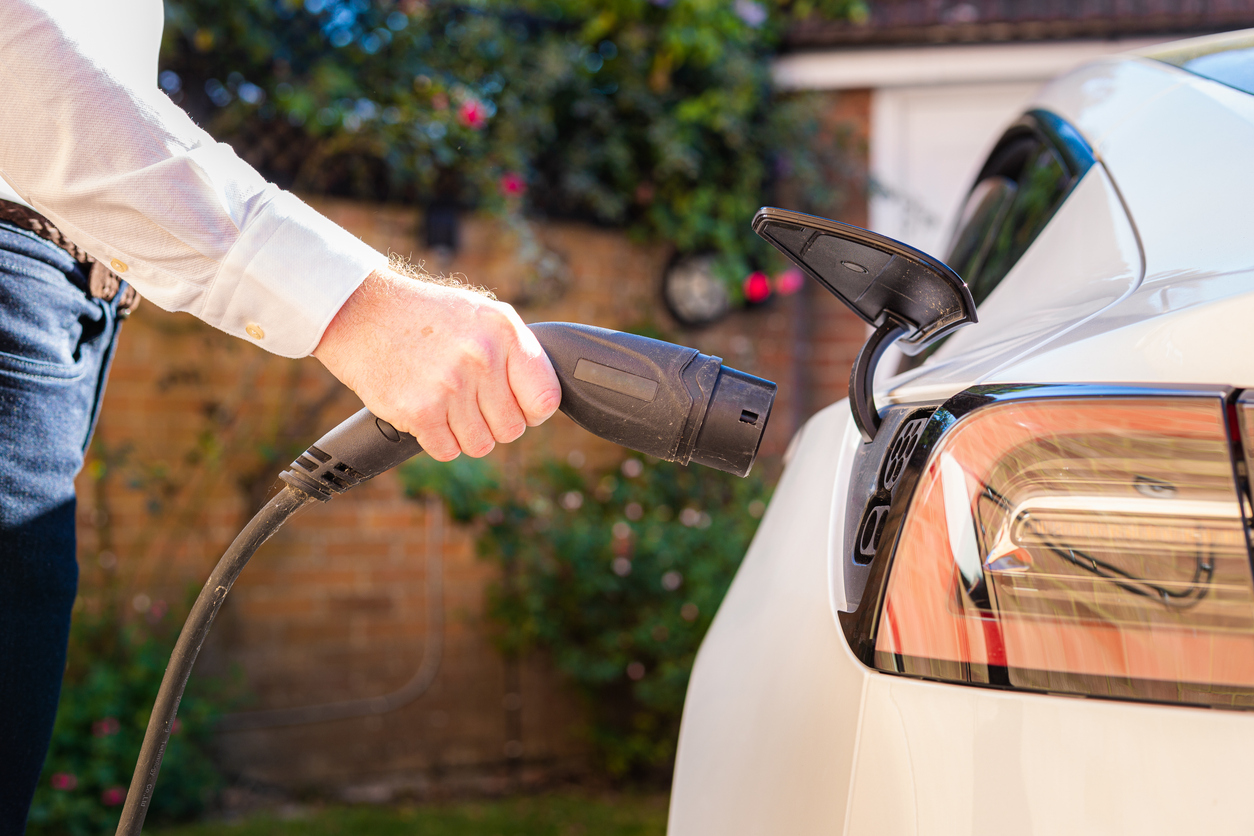
If you’ve just bought an electric car, or you’re circling the decision, you’ve probably realised the actual “how do I charge the thing at home” side of it is murkier than the brochure makes out. There’s a sea of chargers, a tangle of tariffs, a grant scheme that’s been rewritten more than once, and a lot of people online making very confident claims about kW ratings.
This is the article that tries to cut through all of it.
Why EV home charging matters
Home charging is where the money is made. A slow or fast public charge (under 50kWh) costs UK EV drivers around 54p/kWh on average, whereas on a decent overnight EV tariff you can be paying somewhere between 5p and 9p per kWh. That’s not a rounding error. That’s the difference between an EV that feels like a bargain and one that quietly disappoints you every month.
Around 80% of EV charging happens at drivers’ homes, and once you understand why, the whole thing clicks. You plug in when you get home, you wake up with a full battery, and the charging happens at the cheapest, greenest times without you thinking about it. No detours to a forecourt. No hunting for a working fast charger on a motorway in the rain.
By the end of this guide you’ll know what you actually need, what it’ll cost, which chargers are worth looking at, which tariff suits your setup, and what to do if you don’t have a driveway. Let’s get into it.
How EV home charging actually works
To put it simply, you’re putting electricity into your car’s battery. The speed that happens depends on your charger and your car.
There are two ways to charge at home.
Granny cable. This is the 3-pin plug cable that sometimes comes with the car. It plugs into a normal household socket and charges at around 2.3kW. That’s about 8 to 10 miles of range per hour. Fine for emergencies. Miserable as a daily solution. These cables are genuinely not designed for overnight, every-night use. A lot of installers won’t touch 3-pin charging for fire-safety reasons, especially on older wiring.
Wall-mounted charger. A wallbox bolted to your house, wired directly into your consumer unit, usually rated at 7kW (technically 7.4kW). This gives you roughly 25 to 30 miles of range per hour. Plug in at 10pm, wake up to a full battery. This is the type of charger almost everyone ends up with.
You’ll sometimes hear about 22kW chargers. These exist but need a three-phase electricity supply, which most UK homes are single-phase and support a maximum of around 7.4 kW. Upgrading to three-phase is expensive and, honestly, pointless for overnight charging. 7kW is plenty.
Another bit of jargon worth knowing is AC vs DC. Public rapid chargers deliver DC power directly into the battery, which is why they can shove in 50-150kW. Home chargers deliver AC, which the car’s onboard charger then converts to DC. That conversion is the bottleneck, not the charger itself. So even if you had a magical 100kW home AC charger, your car would probably still only accept 7-11kW.
Tethered vs untethered chargers
When choosing a home EV charger, you’ll usually need to pick between a tethered or untethered model.
A tethered charger has the charging cable permanently attached, a bit like a petrol pump hose. It is usually more convenient because the cable is always there and ready to plug in.
An untethered charger has a socket instead, so you plug in your own charging cable each time. It usually looks neater and gives you more flexibility if you change car in future, but it is slightly less convenient because you need to get the cable out every time you charge.
For most households, a tethered charger is the easiest option. But if you care more about a cleaner-looking install or want maximum flexibility, an untethered charger may be worth considering.
What you actually need to charge at home
Let’s list the kit, in rough order of importance.
Off-street parking. This is the deal-breaker. Not a nice-to-have. You need somewhere you can reliably park your car within cable reach of your charger. Driveway, garage, allocated bay, all fine. If you don’t have any of that, skip to the “what if you don’t have a driveway” section further down, because the standard advice here won’t apply to you.
A suitable electricity supply. Nearly every UK home already has this. Standard single-phase supplies handle 7kW chargers without fuss. An installer will check your main fuse rating (almost always 100A) and your consumer unit. Occasionally older homes need a consumer unit upgrade before they can accept a charger. That’s an annoying extra cost but it isn’t a showstopper.
A wall-mounted charger. The box on the wall. This is what the rest of the article is mostly about.
A smart meter. Not strictly required to have a charger installed, but it is required if you want to get on any of the good EV tariffs. If you don’t have one, get one. Suppliers install them for free.
An EV tariff. The hardware doesn’t save you money on its own. What saves you money is the cheap overnight electricity rate you get on a proper EV tariff. More on those below.
Off-street parking is the only true deal-breaker. The rest can be sorted.
Installation: what to expect and what it costs
A standard install is mercifully boring. An OZEV-approved installer comes out, mounts the wallbox (usually on an external wall near the driveway), runs cable from your consumer unit to the charger, puts in an isolator switch, tests everything, certifies it, and leaves. The whole thing typically takes 2-4 hours for a straightforward job.
Typical cost. Across the industry, a home EV charger costs £825–£1,500 fully installed in the UK in 2026, with most UK homeowners paying between £800 and £1,500 for a complete home EV charger installation, with the average sitting at around £1,110. The charger unit itself is usually around £500-£800, with labour making up the rest.
Where it gets more expensive. Long cable runs (if your consumer unit is at the back of the house and the driveway’s at the front), trenching under driveways or through walls, consumer unit upgrades, and earth rod installations. Any of these can push the total up by £200-£500. If your installer doesn’t survey the property first, their quote is a guess.
The OZEV grant in 2026. This is where a lot of outdated advice still circulates. The EV chargepoint grant for homeowners who live in standalone houses (detached, semi-detached, terraced, bungalows) was closed back in 2022 and has not come back. If you live in one of those properties, there’s no grant for you.
However, the scheme is very much alive for two groups. As of 1 April 2026, the maximum grant rate residents and landlords can apply for increased from £350 to £500 per socket, with funding confirmed until 31 March 2027. The grant is specifically for people who:
- Rent their home (with landlord permission), or
- Own a flat, or
- Are a landlord installing chargers on a rental property
There’s also now a grant for households with on-street parking who are installing a cross-pavement charging solution alongside their chargepoint, worth up to £500 from 1 April 2026.
Planning permission. Most installs don’t need it. A standard wallbox on your own property is classed as a permitted development. Conservation areas, listed buildings and flats are where it gets complicated.
Best EV home chargers in 2026
Here’s a quick summary of the best EV home chargers as of 2026. All of these are 7kW single-phase chargers unless noted, all are smart, and all are OZEV-approved where relevant. View our best home EV chargers guide for a deeper breakdown.
| Charger | Power | Tethered / Untethered | Smart features | Indicative installed price | Standout feature |
|---|---|---|---|---|---|
| Ohme Home Pro | 7.4kW | Tethered | Built-in LCD, strong tariff integration | ~£900–£1,000 | Best with Octopus Intelligent Go |
| Hypervolt Home 3 Pro | 7.4kW | Tethered | App, solar modes, LED lighting | ~£1,050–£1,200 | Most weatherproof (IP66), UK-made |
| Easee One | 7.4kW | Untethered | Compact design, load balancing | ~£900–£1,050 | Best-looking untethered option |
| Wallbox Pulsar Plus / Max | 7.4kW | Untethered | App, voice control, load balancing | ~£850–£1,000 | Good value smart charger |
| Andersen A3 | 7.4kW | Untethered (cable hides inside) | App, customisable finish | ~£1,700–£2,000+ | Premium aesthetics |
| EO Mini Pro 3 | 7.4kW | Tethered or untethered | Smallest on the market, Hive integration | ~£900–£1,100 | Cheapest decent option via British Gas |
| Myenergi Zappi | 7.4kW | Tethered or untethered | Solar diversion (ECO+ mode) | ~£1,100–£1,500 | Best for solar panel owners |
Prices shift, finishes vary, and every installer quotes differently. Treat this as a starting point, not gospel.
The chargers, one by one
Ohme Home Pro
Best for: Anyone on (or planning to join) Octopus Intelligent Go, or who just wants the cheapest overnight charging with minimum fuss.
Pros: Class-leading tariff integration, screen on the unit, excellent app, no earth rod needed (PEN fault detection built in), 4G backup.
Cons: Not the best-looking on the wall. Currently limited on solar diversion compared to the Zappi. Some of the cleverest features need an API connection to specific vehicles, which isn’t universal.
Hypervolt Home 3 Pro
Best for: Homeowners who want a premium-feeling, UK-built charger and don’t mind it being a bit of a statement piece on the wall.
Pros: IP66 weatherproofing, strong warranty, great app, solar integration, OVO Charge Anytime compatible, UK-made.
Cons: Tethered only. Larger unit. The styling polarises people. Wi-Fi range can be iffy in bigger properties.
Easee One
Best for: People who want an untethered charger that looks genuinely good on the wall, and for anyone who might want to expand later (you can chain multiple Easee units on one supply).
Pros: Great aesthetics, small footprint, load balancing, PEN fault detection built in, expandable, solar integration via Equalizer accessory.
Cons: Untethered means an extra step every time (and a cable to store). Solar integration costs extra. App is good but less feature-rich than rivals.
Wallbox Pulsar Plus / Pulsar Max
Best for: Design-conscious buyers who want a compact, capable smart charger without stepping into premium-price territory.
Pros: Compact, good app, voice control, Alexa/Google support, reasonable pricing, available in multiple colours.
Cons: Ongoing product compliance shifts worth checking. Less deep integration with UK-specific smart tariffs than Ohme or Hypervolt.
Andersen A3
Best for: People for whom aesthetics matter as much as function, and who have the budget to back that up.
Pros: Best-looking charger on the market (subjectively), hidden cable tidy, premium materials, long warranty options, UK-made.
Cons: Significantly more expensive than mainstream alternatives. You’re paying for design, not functionality.
EO Mini Pro 3
Best for: Buyers who want the smallest charger possible, or anyone who’s going via British Gas / Hive.
Pros: Smallest charger available, tethered/untethered options, good value, Hive ecosystem integration.
Cons: App has received mixed reviews. Smart tariff support is narrower than with Ohme or Hypervolt.
Myenergi Zappi
Best for: Solar panel owners.
Pros: Unmatched solar integration, strong eco credentials, made in Britain, flexible mode options, well-supported.
Cons: Expensive if you don’t have solar. App is functional rather than beautiful. Interface has a learning curve.
Running costs and the best EV tariffs
This is where home charging earns its keep.
Under the current Ofgem energy price cap set at £1,641 per year for a typical household between 1 April and 30 June 2026, electricity on a standard variable tariff averages around 24.7p/kWh. That’s not a disaster, but it’s a lot more than you’d pay on a proper EV tariff.
Here’s where the main options stand as of April 2026. For the full side-by-side, see our complete Best EV Tariffs UK 2026 comparison.
Intelligent Octopus Go (the market leader). IOG gives you a guaranteed off-peak window from 11:30pm to 5:30am where your whole home (not just the car) runs at the off-peak rate, and it smart-charges your car at the cheapest times automatically, which regularly happens outside of the usually off-peak window.
From 1 April 2026, the Intelligent Octopus Go off-peak rate sits at around 7-8p per kWh, though the widely advertised rate for Intelligent Octopus Go is 8p per kWh. Rates vary by region; check your postcode on the Octopus site. If you have a compatible car or charger, this is usually the cheapest tariff you can get.
Octopus Go. This tariff is the simpler alternative to Intelligent Octopus Go. On Octopus Go, you still get a fixed 5-hour cheaper overnight window, but without the smart-charging features that automatically schedule your car to charge at the cheapest times.
The off-peak rate is usually a little higher than Intelligent Octopus Go, but Octopus Go is more flexible because it can work with any EV and any home charger. If your car or charger is not compatible with Intelligent Octopus Go, Octopus Go is usually the next best Octopus tariff to consider.
OVO Charge Anytime. Worth flagging that this has changed significantly. OVO Charge Anytime no longer fits neatly into a straight pence-per-kWh ranking because its main offer now uses monthly plans with included home charging miles, with a 14p/kWh rate for the pay-as-you-go option. If you can only charge at odd hours and the overnight window doesn’t work for you, it’s still worth looking at, but it’s not the simple 7p tariff it used to be.
EDF GoElectric. EDF GoElectric offers 6.99p per kWh off-peak between 11pm and 6am as of 1 April 2026, and is available with any EV or charger. That’s a solid mainstream option if your car or charger isn’t compatible with the smarter tariffs. Standing charge is slightly higher, but the longer off-peak window (7 hours vs 6) can help if you need to charge other things overnight too.
E.ON Next Drive, British Gas EV Power, ScottishPower EV Saver. These all cluster around the 8–9.5p off-peak mark with various off-peak windows. Worth checking if you’re already with one of these suppliers, less compelling as a reason to switch.
What does it actually cost to charge at home?
A typical EV does about 3.3 miles per kWh. So for 100 miles of driving you need about 30kWh.
- On a standard variable tariff (~24.7p/kWh): roughly £7.40 for 100 miles.
- On Intelligent Octopus Go at 8p/kWh overnight: roughly £2.40 for 100 miles.
- On a public rapid charger at 54p/kWh: roughly £16.20 for 100 miles.
Over 10,000 miles a year, that’s the difference between paying £240 and paying £1,620. Hence the point of all this.
Smart charging: what it actually does and whether you need it
This section used to be a proper debate. It isn’t anymore, because the government made it one for you.
According to the Smart Charge Points Regulations, as of 30th June 2022, all EV chargers sold in the UK for home or workplace use must support a certain level of smart functionality and meet a set of minimum requirements. In other words, you can’t legally buy a new dumb charger. If anyone’s quoting you for a non-smart unit in 2026, something is off.
Smart functionality in practice means:
- Scheduled charging. Set it to only charge during cheap hours. Essential for getting value out of an EV tariff.
- Load balancing. The charger monitors total household demand and throttles back if you’re running the oven, kettle and shower simultaneously. Stops your main fuse tripping.
- Tariff integration. The smartest chargers talk directly to your energy supplier’s API (Ohme and Hypervolt are leaders here) and automatically charge at the cheapest times without you having to set schedules yourself.
- Solar integration. For those with PV panels, the charger can divert excess solar generation into the car instead of exporting it. Myenergi Zappi is the benchmark here.
- Randomised delay. A built-in pause of up to 10 minutes on start/stop, to prevent thousands of chargers kicking in simultaneously when a cheap window opens and crashing the grid. You can override it if needed.
Vehicle-to-grid (V2G) is the coming feature. It lets the car’s battery feed electricity back into the grid (or your home) during peak periods, earning you money or lowering your bills. The hardware and car compatibility are still limited, but it’s gathering momentum. A few of the current chargers are marketed as “V2G ready,” which mostly means “will need a firmware update and a specific vehicle.” Don’t pay a premium for V2G today unless you know exactly what you’re getting.
What if you don’t have a driveway?
The honest answer: home charging gets harder, and for some people it isn’t realistic. But the options are better than they were two years ago, and they’re improving fast.
Cross-pavement charging (cable channels). This is the big one. A narrow, lidded channel is cut into the pavement between your house and the kerb, and your cable runs safely through it. No trip hazard, no cable draped across a public footway. Companies like Kerbo Charge and Gul-e are the main players. New research from Vauxhall found that 42 percent of councils will have cross-pavement charging available by the end of 2026, with many councils now running approval schemes.
The catch: you need your local council’s sign-off, and not every property is suitable (tree roots, pavement width, proximity to street furniture all matter). Costs vary wildly, from free in some pilot areas to over £1,000 elsewhere. The on-street parking chargepoint grant provides up to £500 from 1 April 2026 when installed alongside a cross-pavement solution, which takes some of the sting out.
On-street public chargepoints. Lampposts with chargers built in (typically 5-7kW) are now common in many urban areas. Rates are higher than true home charging but much better than rapid chargers. Worth checking Zap-Map to see what’s installed on your street.
Shared chargepoints in residential car parks. If you live in a flat with a communal car park, the landlord or management company can apply for an OZEV grant covering up to £500 per socket (up to 200 sockets a year). If your block doesn’t have charging yet, the conversation to start is with your property manager, not with an installer. The EV infrastructure grant for residential car parks may also apply, providing up to £500 per bay towards the cost of installing shared infrastructure.
Rapid charging + top-up charging. If none of the above works, you can run an EV on a mix of public rapid sessions and occasional slow top-ups at work or a supermarket. It costs more than home charging, but it’s still competitive with petrol at high mileages.
If you’re in a flat with no allocated parking, no driveway, no cooperation from your freeholder, and no on-street charging nearby, an EV might not be the right move yet. That’s a bitter thing to say, but it’s better than pretending otherwise.
FAQ
How much does it cost to install an EV charger at home in the UK?
A standard home EV charger installation typically costs £800–£1,200 all in, including the unit and labour. That assumes a straightforward install with the consumer unit nearby. Long cable runs, trenching across a driveway, or an outdated consumer unit that needs upgrading will push costs higher. Always get at least two quotes from OZEV-authorised installers.
What is the best home EV charger in the UK in 2026?
For most people, the Ohme Home Pro or Wallbox Pulsar Plus are the standout options. The Ohme is the best pick if you’re on Octopus Intelligent Go as the two integrate directly and schedule charging automatically around the cheapest slots. The Wallbox is the best value option if you want something reliable without paying for extra features. If you have solar panels, the Myenergi Zappi is in a category of its own. See our full charger comparison above for the complete breakdown.
Do I need a smart meter to charge an EV at home?
For the best ones, yes. Intelligent Octopus Go, OVO Charge Anytime, EDF GoElectric and most other EV tariffs require a smart meter that can send half-hourly readings. Smart meters are free from your supplier.
Is the OZEV grant still available?
Yes, but not for everyone. Homeowners living in standalone houses (detached, semi, terraced, bungalow) with off-street parking aren’t eligible and haven’t been since 2022. The grant is still available for flat owners, renters and landlords, and it now covers up to £500 per socket from 1 April 2026. There’s also a separate grant for households with on-street parking installing a cross-pavement solution.
Can I get a home charger if I rent?
Yes, as long as your landlord agrees. You’ll need written permission, which the OZEV grant application asks for. Landlords themselves can also apply for a grant to install charging at their rental properties, up to £500 per socket and up to 200 sockets a year.
Will a 7kW charger be enough for my car?
For nearly everyone, yes. 7kW adds roughly 25-30 miles of range per hour. Over an 8-hour overnight charge, that’s 200-240 miles. Unless you’re routinely doing 300+ miles a day and arriving home at 11pm, 7kW is plenty.
Can I install it myself?
No. EV chargers must be installed by an OZEV-approved installer. DIY installs void warranties, fail building regulations, and potentially invalidate home insurance. Not worth it.
Conclusion
If you have a driveway and a house: You’re in the easy lane. Pick a smart charger that suits your tariff preference (Ohme for Octopus, Hypervolt for OVO, Zappi if you have solar). Budget around £1,000 installed. Get on Intelligent Octopus Go or equivalent. Don’t bother waiting for the OZEV grant, because it doesn’t apply to you.
If you rent or own a flat: Check you’ve got dedicated off-street parking. Get your landlord’s written permission in writing, apply for the OZEV grant (up to £500 from April 2026), and go from there. The grant meaningfully changes the maths.
If you have no driveway: Look into cross-pavement solutions first. See if your council is running a scheme. If they are, the on-street chargepoint grant can help cover the cost. If they aren’t, lean on on-street public chargers and keep an eye on council announcements, because this is changing fast.
If you have solar panels: Zappi. Pair with Intelligent Octopus Go and an export tariff, and you’ll be close to free motoring on sunny days.
A final word of caution: everything in this article is correct as of spring 2026, but prices, tariffs and grant eligibility shift regularly. Before committing any money, double-check current rates with the supplier and confirm grant eligibility with your installer. Specifically worth checking: whether your chosen charger is still compliant with current UK smart charging regulations (some products have come and gone), and whether your preferred tariff still accepts new customers.
Home charging, done right, is one of the few genuine win-wins in the EV world. Cheaper per mile than petrol, cheaper per kWh than public charging, and it happens while you’re asleep. Once it’s sorted, you barely think about it again.