Every EV driver has heard of Intelligent Octopus Go. It’s been the default forum recommendation for years, usually as “just get on IOG, it’s the cheapest.” Broadly true, but it leaves out quite a lot.
So how does Intelligent Octopus Go work in practice? You hand scheduling control to Octopus, they charge your car when the grid is cheapest and greenest, and in exchange you get one of the lowest unit rates in the UK market. There are strings attached. A six-hour cap that changed in 2026. A compatibility list that frustrates as many people as it helps. And the peak rate, which is where households quietly lose the savings they thought they were making.
The short version: how Intelligent Octopus Go works in one paragraph
Intelligent Octopus Go gives you a guaranteed whole-home off-peak rate from 11:30pm to 5:30am every day, currently advertised at 8p/kWh (regional variation applies, and some fixed tariffs are now lower). On top of that, Octopus schedules up to six hours of smart charging per 24 hours whenever the grid is cheap and green, which can fall inside or outside the overnight window. You tell the Octopus app when you need the car ready, plug in, and leave it. Peak-rate electricity at other times of day sits around 27-28p/kWh, which is roughly in line with the April 2026 Ofgem price cap of 24.67p/kWh, but a few pence higher in most regions.
That’s the shape of it. The details below are where the difference between saving £400 a year and saving nothing lives.
How the smart scheduling actually works
The bit most people don’t understand is what “intelligent” actually means. It isn’t marketing fluff. Octopus genuinely takes control of when your car charges, using its Kraken platform to match charging slots to wholesale electricity prices and renewable generation.
You plug in and set a target in the Octopus app (say, 80% by 7am). Kraken works backwards from that target, looking at wholesale prices and renewable output, and schedules charging during the cheapest, greenest slots it can find. Those slots can be anywhere inside the guaranteed 23:30-05:30 off-peak window, or outside it when surplus renewables are on the grid.
When Octopus charges your car outside the standard off-peak window, the off-peak rate still applies for the duration of that smart charging session, and your whole home gets the cheap rate during those hours too. That’s the bit that makes IOG meaningfully different from a plain two-rate tariff. You’re not just getting cheap car charging. You’re getting cheap electricity for whatever else you happen to be running (dishwasher, washing machine, heat pump) when Octopus decides to smart charge.
You can override it with a “bump charge” if you need the car ready immediately, but that electricity is billed at the peak rate.
The 2026 six-hour cap and Charge Cap feature
This is the change that confused a lot of people earlier in 2026, so worth explaining clearly.
Octopus has rolled out an automatic cap of six hours of smart-charged electricity per 24-hour period at the off-peak rate. If a charge session runs longer than six hours, anything beyond that is billed at the peak rate. The stated reason is to keep off-peak rates low across the whole customer base; very long charging sessions cost Octopus more to procure energy for and push up the average cost.
To go with it, Octopus added a feature called Charge Cap. This lets you choose between two behaviours:
- Cap on: Charging stops at six hours even if the car hasn’t hit your target. You get the cheap rate on everything, no peak-rate creep.
- Cap off: Charging continues until it hits your target, with any hours past six billed at the peak rate.
Around 80% of Intelligent Octopus Go sessions already fall inside six hours, so most people won’t feel any difference. Where it bites is if you’ve got a big-battery EV that’s been run down to 10%, or a 3.7kW charger rather than a 7kW one, or you routinely drive 200+ miles a day. In those cases, Charge Cap is a small daily decision: cheaper charging or faster charging?
Eligibility: can you actually get it?
To get on Intelligent Octopus Go, you need all of the following:
- An Octopus Energy electricity supply. Existing Octopus customers can switch tariff within the app. Everyone else has to switch suppliers first.
- A smart meter sending half-hourly readings. SMETS1 or SMETS2. If you haven’t got one, Octopus will install one free, but it takes a few weeks.
- A compatible EV or a compatible charger. You only need one, not both.
The compatibility list changes often, and Octopus’s own checker at sign-up is the source of truth. As of April 2026, the main IOG-compatible chargers are the Ohme Home Pro and ePod (direct API, usually the simplest setup), myenergi Zappi and Zappi Glo (best for solar homes), Hypervolt Home 3 Pro, Indra Smart Pro and Smart Lux, VCHRGD Seven and Seven Pro, and Andersen Quartz and A3.
On the vehicle side, Octopus claims compatibility with over 280 car and charger combinations, covering the bulk of popular EVs from Tesla, Kia, Volkswagen, Audi, Ford, BMW, Hyundai, Renault and Volvo. The frustrating bit: specific model years and trims can fall in or out of the list, and the checker sometimes doesn’t match what the car’s spec sheet suggests. Run your exact registration through Octopus’s checker before assuming you’re eligible.
If your car isn’t compatible but your charger is, that’s fine. IOG uses either the charger or the car as the integration point, not both. Running both usually causes scheduling conflicts, so pick one. If neither is compatible, you’re looking at standard Octopus Go instead.
Intelligent Octopus Go vs standard Octopus Go
These two tariffs are often talked about interchangeably and they’re really not the same. Here’s what separates them.
Standard Octopus Go is a simple two-rate tariff. Fixed five-hour off-peak window from 00:30 to 05:30. Works with any EV and any charger. You set a timer on the car or the charger, and that’s it. Headline off-peak rate is slightly higher than Intelligent (around 9.5p/kWh varying by region). No app-based scheduling, no dynamic bonus slots.
Intelligent Octopus Go has the longer six-hour whole-home window (23:30-05:30), smart scheduling, bonus slots outside the window, and a cheaper headline rate (8p/kWh regionally). But it requires compatible hardware and you hand charging control to Octopus.
Which to pick? If your setup is compatible, Intelligent Go is usually cheaper in practice, especially if you also shift dishwasher or washing machine use into the overnight window. If your car or charger isn’t on the compatibility list, Octopus Go is still a decent tariff and better than a standard variable rate for any EV driver charging overnight.
Summary of Intelligent Octopus Go in 2026
| Feature | Detail (as of April 2026) |
|---|---|
| Off-peak rate | ~8p/kWh (advertised), regional variation; some fixed tariffs lower |
| Peak rate | ~27-28p/kWh, varies by region |
| Standing charge | Varies by region, roughly in line with price cap |
| Off-peak window | 23:30-05:30 (6 hours guaranteed, whole home) |
| Smart charging cap | Up to 6 hours per 24 hours at off-peak rate |
| Hardware needed | Compatible EV or compatible charger, plus smart meter |
| Whole-home benefit during smart charging | Yes, off-peak rate applies to the whole home during scheduled charging |
| Bump charge rate | Peak rate applies |
Treat this table as a directional guide. Rates vary by your postcode and Octopus has repriced the tariff multiple times over the past two years. Always confirm the current figure on Octopus’s own site before switching.
What it actually costs to run
A typical UK EV does around 3.3 miles per kWh. At 8p/kWh on the off-peak rate, that’s roughly £2.40 per 100 miles. On the April 2026 Ofgem price cap (24.67p/kWh), the same 100 miles costs about £7.40. On a public rapid charger at average UK rates (around 54p/kWh), it’s north of £16.
For a 7,000-mile-a-year driver, switching from a standard variable tariff to Intelligent Octopus Go saves somewhere in the region of £300-£400 a year on car charging alone, depending on how much of the charging actually ends up in the cheap window. Add the value of running your dishwasher, washing machine and (if you’ve got one) a heat pump on cheap overnight rates and the number can stretch further.
The honest caveat: the peak rate on IOG is usually a bit higher than the Ofgem price cap. Households that use a lot of electricity during the day (work from home with electric heating, large families, big daytime cooking loads) might lose some of the overnight savings to daytime creep. If less than about 30% of your household electricity ends up in the cheap window, run the numbers before switching.
For a full comparison against rival EV tariffs, see Best EV Tariffs UK 2026.
How it works with solar panels and home batteries
Intelligent Octopus Go is an import-only tariff. If you’ve got solar panels, you need to pair it with an export tariff to get paid for what you sell back. Outgoing Octopus is the obvious companion, and the two work together smoothly. See Best Solar Export Tariff UK for the comparison.
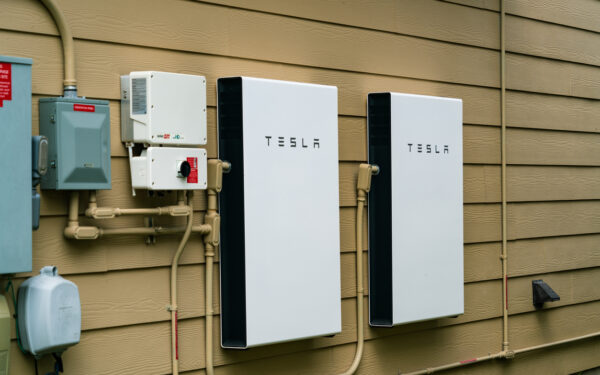
Home batteries add another layer. On IOG, grid electricity during the off-peak window is cheap enough that for many households it makes sense to charge the battery from the grid overnight, then discharge during peak hours. With the 17-19p/kWh gap between off-peak and peak, a 10kWh battery can shift a couple of hundred pounds a year. Solar self-consumption during the day still beats importing at peak rates, so that stays the priority when the sun’s out.
If you’re adding solar or a battery specifically to make better use of an EV tariff, it’s worth getting a couple of installer quotes before committing.
The virtual power plant bit
Here’s why Octopus can afford to offer such a low off-peak rate: Intelligent Octopus Go customers form one of the largest virtual power plants in the world, aggregating the flexibility of hundreds of thousands of EVs. When the grid has surplus renewable generation, Octopus soaks it up by scheduling IOG customers to charge. When demand spikes, it holds off. You’re helping balance the grid, Octopus buys cheap wholesale power at scale, and the grid gets flexibility it would otherwise pay a gas peaker plant for.
How to switch to Intelligent Octopus Go
- Check eligibility. Run your EV and/or charger through Octopus’s compatibility checker. Confirm you’ve got a working smart meter sending half-hourly reads. If you’re not already with Octopus, plan to switch supplier first.
- Sign up. Existing Octopus customers switch tariffs in the app. New customers can switch via Octopus’s site.
- Connect your car or charger in the Octopus app. Pick one, not both. The app walks you through pairing.
- Set your ready-by time and target charge. Octopus takes over scheduling from there.
- Plug in daily. Even if you don’t need a full charge. This gives Octopus flexibility to schedule during the cheapest slots and saves you money.
- Check the first month’s bill. Confirm off-peak usage is being billed correctly. Smart meter setup issues are the most common early complaint, and they usually show up in the first bill.
Common misunderstandings
A few things that trip people up:
- Assuming your car is compatible without checking. The only way to know for sure is to run it through Octopus’s checker at sign-up.
- Not having a smart meter in working order. No half-hourly data, no IOG.
- Using the charger’s own timer. This can override Octopus’s scheduling and cause failed charges. Set the charger to “charge immediately” or “always available” mode, and let Octopus do the scheduling.
- Running high-draw appliances during peak hours. Tumble dryers at 3pm cost twice what they do at 3am on this tariff.
- Ignoring the peak rate. A daytime-heavy household without solar can genuinely be worse off than on a plain variable tariff.
- Not pairing with an export tariff if you have solar. You’re leaving money on the table.
Special cases worth flagging
Two-EV households. The six-hour cap is per household, not per car. Plug both in overnight and let Octopus rotate.
High-mileage drivers. The cap will affect you. Work out whether Charge Cap on or off makes more sense for your pattern.
Heat pump households. Compare IOG against Cosy Octopus before committing, since the load patterns are different. See Best Heat Pump Tariff UK.
New EV buyers who haven’t bought a charger yet. Buy an Ohme Home Pro or ePod. The integration is the tightest on the market and the tariff was partly built around Ohme hardware.
Renters and flat dwellers. You can still switch to IOG if you’ve got a working smart meter and a compatible car or shared-space charger. Installing a new charger is where it gets complicated. See the full EV Home Charging Guide for the charger-side detail.
FAQ
What is the Intelligent Octopus Go off-peak rate in 2026? The advertised off-peak rate is 8p/kWh between 11:30pm and 5:30am. Regional rates vary, and some fixed versions of the tariff are now priced lower. Check the rate for your postcode on Octopus’s site.
Is Intelligent Octopus Go the cheapest EV tariff? On headline rate, close to the top but not always the lowest. EDF GoElectric currently advertises 6.99p/kWh and works with any EV. Good Energy EV Charge sits around 6.6p/kWh. IOG’s edge is the whole-home cheap rate during smart charging and the bonus off-peak slots, which often make it cheaper in practice than tariffs with lower headline numbers.
Do I need a specific EV charger for Intelligent Octopus Go? No, you need either a compatible charger or a compatible car. Main compatible chargers include the Ohme Home Pro and ePod, Zappi and Zappi Glo, Hypervolt Home 3 Pro, Indra Smart Pro and Lux, VCHRGD Seven models, and Andersen Quartz and A3.
How does the 6-hour cap work? You get up to six hours of smart-charged electricity per 24-hour period at the off-peak rate. Anything beyond that bills at peak. Charge Cap lets you toggle between capping at six hours or pushing through to your target regardless.
Can I use Intelligent Octopus Go with solar panels? Yes, and you should pair it with an export tariff like Outgoing Octopus. Overnight cheap rates also make home battery arbitrage viable.
What happens if I charge for more than 6 hours? The first six hours are billed at off-peak. Any time past six hours bills at peak, even if it’s inside the 23:30-05:30 window.
Is my car compatible with Intelligent Octopus Go? Octopus claims over 280 car and charger combinations work. Specific model years and trims sometimes vary. The only reliable check is running your registration through Octopus’s compatibility tool.
Conclusion
For EV drivers with a compatible car or charger, a smart meter, and a driving pattern that fits overnight charging, Intelligent Octopus Go is hard to beat. The whole-home cheap window, bonus off-peak slots and the cheapest headline rate from a major supplier stack up to real savings over a year.
Solar households with a home battery get close to ideal economics, especially paired with Outgoing Octopus for export income. Heat pump households should compare against Cosy Octopus before committing. High-mileage drivers with big-battery EVs need to run the six-hour cap maths before switching. And for anyone whose car or charger isn’t compatible, plain Octopus Go still works with anything and beats a standard variable rate comfortably.
If you’re weighing up IOG against the wider tariff landscape, Best EV Tariffs UK is the comparison post to read next. When you’re ready to switch, a referral link gives both sides £50 of bill credit.
Rates, compatibility and terms change often on this tariff. Always confirm current figures on Octopus’s own site before signing up.