

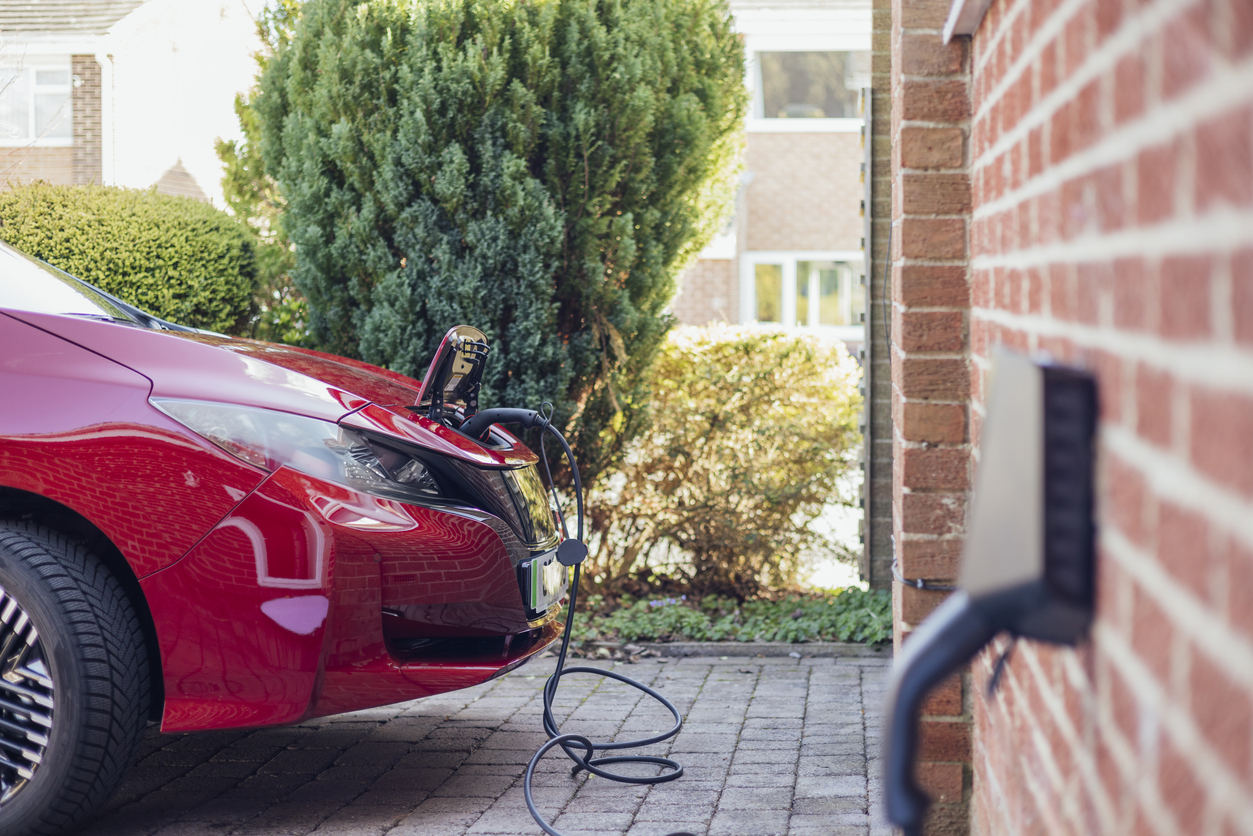
You’ve decided to fit a home charger, and now you’re stuck on the choice that shapes how you charge every day: tethered vs untethered EV chargers.
Both formats charge at the same speed. A 7kW tethered unit and a 7kW untethered unit deliver identical power. The difference is purely physical. Is the cable bolted to the wall, or do you bring your own each time?
The answer depends on how your household uses the car. If you haven’t picked a brand yet, our home EV charging guide covers the wider picture.
What “tethered” and “untethered” actually mean
A tethered charger has a cable permanently attached to the charger, typically 5m or 7.5m long, ending in a Type 2 plug. Type 2 is the standard connector on every mainstream new EV sold in the UK.
An untethered charger is just a wall-mounted socket. You supply the cable, usually the Type 2 one that came in your car’s boot, and plug it in at both ends each time.
Why tethered usually wins for single-car households
Convenience is the answer. Pull onto the drive, grab the cable, plug in, walk inside. No opening the boot. No fishing a cable out of a damp bag. It may not seem like much difference, but that small ritual adds up across hundreds of charging sessions a year.
The downside: the cable lives on the wall when you’re not charging. Most units have a hook or wraparound holster, but some buyers find it visually messy. Most stop noticing within a week.
The Ohme Home Pro is often the default tethered pick for single-EV households on smart EV tariffs like Intelligent Octopus Go.
Why untethered makes sense for multi-EV households and tidy walls
Two situations point untethered.
First: more than one EV in the household. The cable lives in whichever car is going out next, or different drivers prefer different lengths. An untethered unit gives you that flexibility.
Second: you care about how the wall looks when nothing’s plugged in. Untethered chargers are usually smaller too. The Easee One is typically chosen by households wanting a compact install.
The cable theft question
People bring this up more than they should. During an active session, both ends lock electronically, so mid-charge theft is rare. Theft of an unplugged tethered cable from a wall is more plausible but still uncommon, particularly on drives not visible from the street. Storage habits matter more than theft risk.
Cable length: the bit people get wrong
Standard tethered cables come in 5m or 7.5m. Some brands (Hypervolt, Andersen) offer longer options at extra cost. Measure from the wall position to your car’s charge port in its usual parking spot, then add slack. Get this wrong and you’ll be reversing onto the drive at an angle for the next decade.
Price difference
Untethered units are usually £50 to £100 cheaper. Pod Point charges around £50 more for the tethered Solo 3S. Ohme prices the ePod just below the Home Pro. If you don’t already own a Type 2 cable, factor in £100 to £200 for a decent one. For most buyers it isn’t the deciding factor.
Which chargers come in which format?
- Ohme Home Pro is tethered. Ohme ePod is untethered.
- Hypervolt Home 3 Pro is tethered only.
- Easee One is untethered.
- Zappi comes in both, same price either way.
- Pod Point Solo 3S comes in both.
For a fuller breakdown, see our [best home EV chargers UK]([Affiliate Link]) guide.
Quick decision summary
- Single EV, want convenience: tethered.
- Multiple EVs, or you want a tidy wall: untethered.
- Not sure: tethered. Day-to-day convenience usually wins.
FAQs
Are tethered chargers faster? No. A 7kW unit charges at 7kW regardless of cable format. Zapmap covers the basics.
Can I add a cable later to an untethered unit? Yes. Buy a Type 2 to Type 2 cable in the length you want, around £100 to £200.
Do tethered cables wear out faster? Not meaningfully. They’re rated for thousands of cycles and will outlast your car.
Which is better for solar? Format doesn’t affect solar diversion. The charger model does.
In summary
Tethered is the easy daily choice for one EV. Untethered earns its keep when there are two cars or you really care about a clean wall. Still weighing up models? The [best home EV chargers UK]([Affiliate Link]) guide goes deeper.