
Tariff unit rates are one of the two main charges on a UK energy bill. The other is the standing charge. Together they decide what you pay each month, so it’s worth understanding what the unit rate actually is and why it shifts around.
Most people glance at the figure on their bill and move on. That’s fair enough when energy is cheap. When it isn’t, knowing how the number is built starts to matter.
What is an energy unit rate?
Put simply, the unit rate is the price you pay for each unit of energy you use. It’s measured in pence per kilowatt hour, usually written as p/kWh. Use one kilowatt hour of electricity, and you pay one unit rate’s worth of pence. Use a hundred, and you pay a hundred times that.
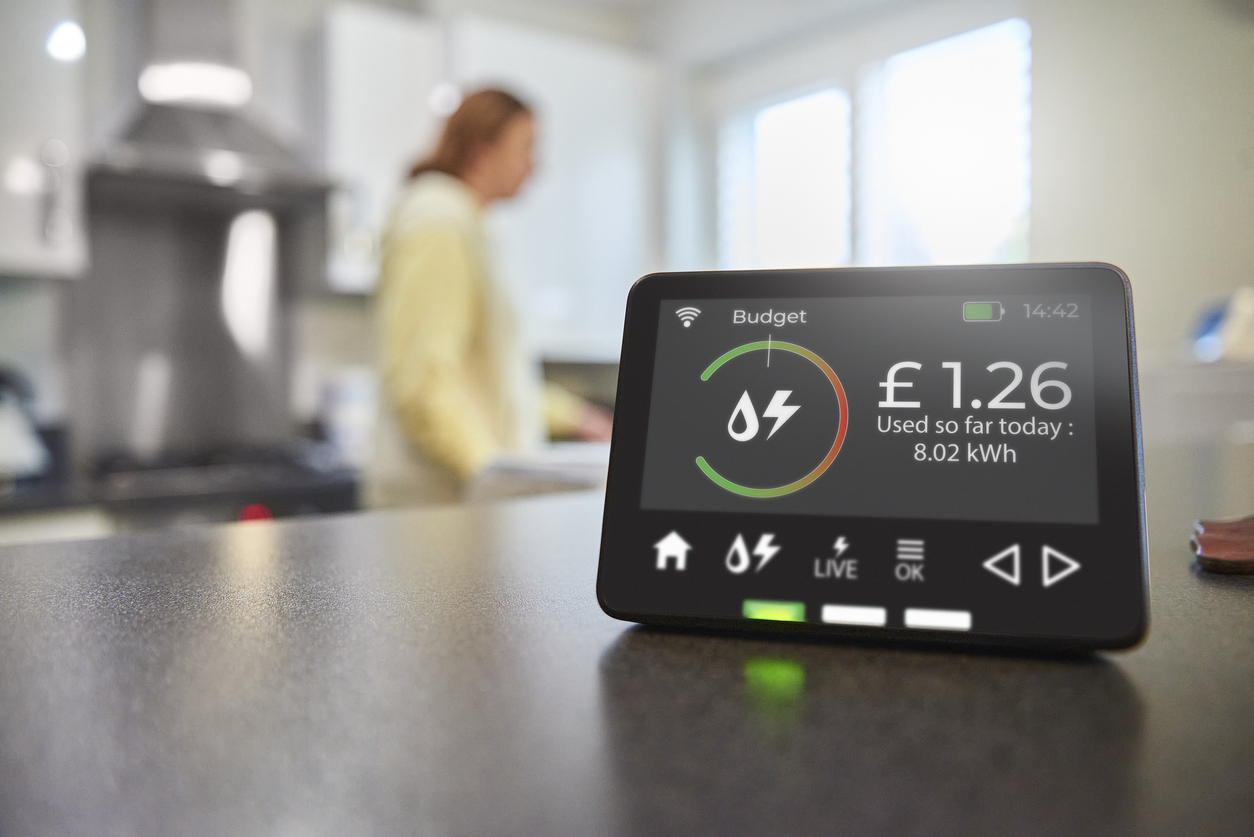
A kilowatt hour is just a measure of energy. Running a 1,000 watt appliance for an hour uses one kWh. An electric oven on full blast for thirty minutes is roughly a kWh. A modern fridge might get through one or two kWh a day. Your smart meter or your meter reading tracks how many kWh have passed through, and the unit rate turns that into money.
Gas and electricity each have their own separate unit rate. They’re priced differently because they’re delivered through different networks and have different underlying costs. Gas is generally cheaper per kWh, though a typical home that heats with gas uses far more of it than electricity, which is why the gas bill can still be larger overall.
The variable part of your bill is your unit rate multiplied by the energy you use.
How unit rates appear on your bill
On your bill, the unit rate is applied to the kWh used in the billing period. That number sits alongside the standing charge, which is a fixed daily fee you pay regardless of usage.
A typical bill will show your previous and current meter readings, the kWh used in between, the unit rate applied, and the total. If you’re on a dual fuel tariff, you’ll see this twice. Once for gas, once for electricity.
The unit rate is the part of the bill you can actually influence. Use less, pay less. The standing charge is there whether you use anything or not. That’s why energy-saving advice tends to focus on usage. It’s the lever you can pull.
What affects the unit rate you pay
A few things move the number up or down:
- Supplier and tariff. Different suppliers price differently, and tariffs within the same supplier vary too. A new customer fixed deal often sits below the standard variable rate.
- Fixed or variable. A fixed tariff locks your unit rate in for a set period, usually a year or two. A variable rate can move with the market and the price cap.
- The Ofgem price cap. This sets a maximum unit rate suppliers can charge on standard variable tariffs. It’s reviewed quarterly.
- Region. Where you live changes what you pay.
- Payment method. Direct debit is usually cheapest. Standard credit and prepayment often cost more per kWh, because suppliers price in the cost and risk of collection.
- Fuel type. Gas and electricity unit rates are not the same, and they don’t always move in lockstep.
What’s actually inside the unit rate itself is wholesale energy costs, network charges, policy costs (things like funding for renewables and social schemes), supplier operating costs and margin, and VAT. When you hear that energy prices have gone up because of wholesale gas markets, this is the bit that’s moving.
Why unit rates vary by region
The cost of delivering electricity and gas isn’t the same everywhere. Network costs, local infrastructure, population density, and how energy gets to your area all feed into the price. Two households on the same tariff in different parts of the country can pay noticeably different unit rates for the same energy.
The UK is split into 14 electricity distribution regions, each with its own network operator and its own cost base. Rural and remote areas tend to be more expensive to serve than dense urban ones, though it’s not a hard rule. Gas has its own regional breakdown too.
It’s not a quirk. It’s built into how the system is priced.
Unit rates and time of use tariffs
Some tariffs don’t have a single flat unit rate. Economy 7 splits the day into cheaper night and pricier day rates, useful if you have storage heaters or can shift big appliances overnight. Octopus Tracker adjusts daily based on wholesale gas and electricity prices. Agile Octopus changes every half hour and can occasionally go negative when the grid has more renewable power than it knows what to do with. EV tariffs typically offer a low overnight rate aimed at car charging.
If your usage is flexible, these can work in your favour. If it isn’t, they may not. A smart meter is usually a requirement.
FAQ
What is a unit rate in energy?
The price you pay for one kilowatt hour of energy, shown in pence per kWh. Multiply it by what you’ve used to get the cost of your energy for that period.
How is the electricity unit rate calculated?
It bundles together the wholesale cost of electricity, network charges, supplier costs and margin, policy costs, and VAT. The Ofgem price cap caps it for standard variable tariffs, and the cap is recalculated every three months based on those underlying costs.
Why is my unit rate different from my neighbour’s?
Usually because you’re on different tariffs, different suppliers, or different payment methods. If they’re on a fixed deal from a year ago and you’re not, that alone can explain a big gap. Smart meters being read differently or estimated readings can also cause apparent differences.
Is the unit rate the same as the price cap?
No. The price cap sets the maximum unit rate (and standing charge) suppliers can charge on standard variable tariffs. Your actual unit rate may be at the cap, below it on a fixed deal, or different again on a time of use tariff.
Do gas and electricity have different unit rates?
Yes. Gas is generally cheaper per kWh than electricity, often by a factor of three or four, though you’ll typically use more of it if you heat your home with it. They’re shown as separate lines on a dual fuel bill.
Can I negotiate my unit rate?
Not directly. Suppliers don’t haggle on individual tariffs. What you can do is switch to a cheaper tariff with the same supplier or a different one, or change payment method to direct debit if you’re not already.